
Nigeria Independence Day Message: What Ownership, Justice and Unity Ask of Us
October 1, 2026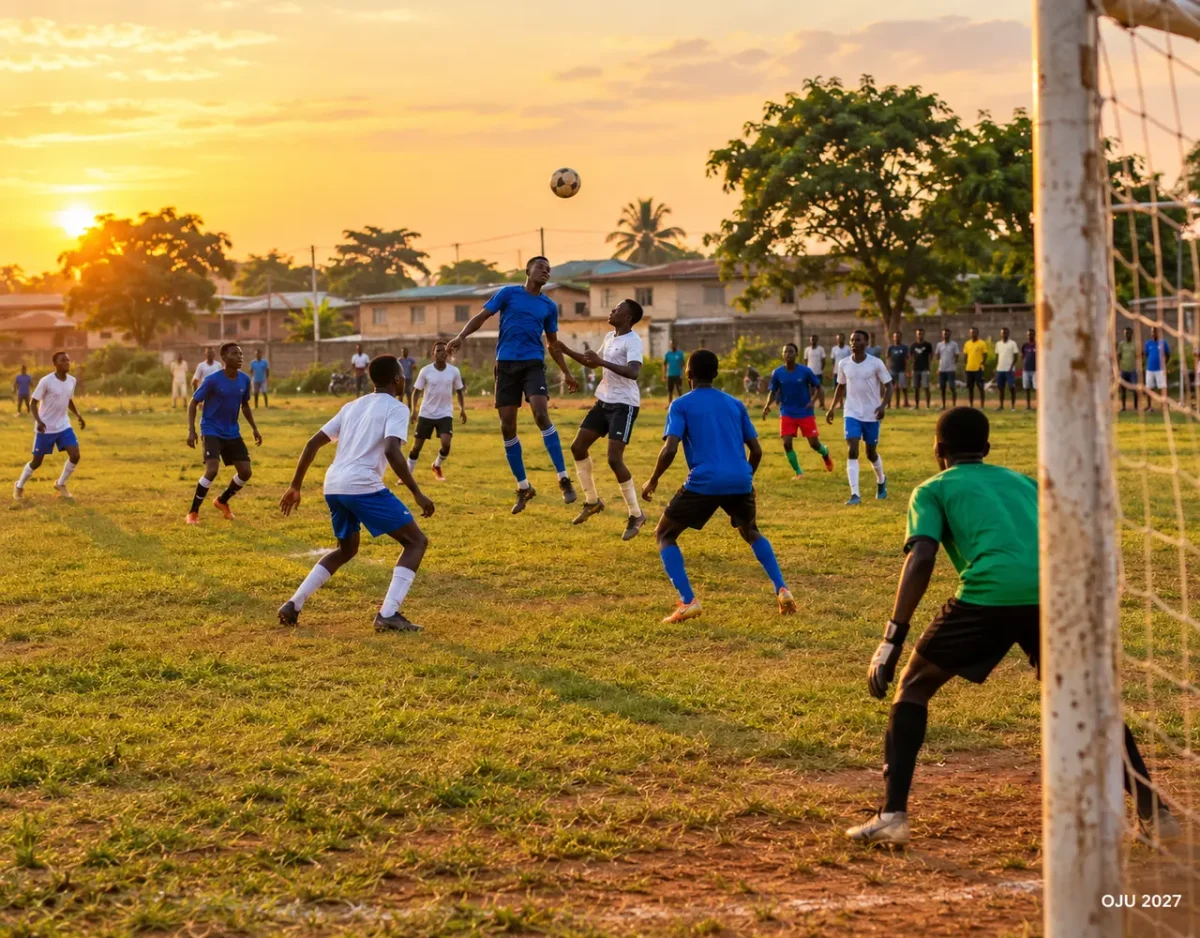
Ask any young man in Bwari or AMAC where he plays on a Saturday, and he will name a pitch. It might be a dusty field behind a primary school or a patch of open ground between two estates. These places are rarely on a development plan, yet they hold more young people each weekend than most of our public programmes do in a year.
That is why I treat youth football in AMAC/Bwari as a policy question and not a pastime. This article sets out why, what a ward-level tournament can and cannot do, and what I will push for if I am given the mandate to represent this constituency.
The pitch is already a community institution
Young people do not need to be persuaded to show up for football. They arrive on their own, in numbers, with their own kit and their own rules. Most government programmes struggle to get that kind of attendance.
If the youth are already gathering, the question is what else can be built around that gathering. A mentoring session can follow a match. A skills registration desk can sit beside the referee's table. A health screening can run on the same day. We meet young people where they already are instead of asking them to come to us.
Why the ward is the right unit
AMAC has 12 wards and Bwari has 10. Each ward has its own character, its own leaders and its own set of needs. A single constituency-wide event in one stadium would draw the best players and leave most young people watching on a phone, if at all.
Running competition at ward level changes that. A team from Kubwa plays a team from Nyanya's side of the map only at the final stage. Before that, every ward fields its own players in front of its own neighbours. That builds local ownership of the event, which is the first of the three values this campaign stands on.
What a tournament can do
A tournament is not a jobs programme, and I will not pretend otherwise. What it can do is specific and useful:
- Identify talent. Scouts, coaches and academies rarely visit our wards. A properly organised competition with recorded results gives players something to point to.
- Create a reason to organise. Teams need captains, managers, kit, transport and fixtures. Young people who run a team are practising the skills they will use to run a business.
- Open a conversation. A crowd of young people in one place is an opportunity to listen. I want to hear what they need on skills, tools, training and access to credit, and I want to hear it from them directly.
- Offer a safer way to spend a weekend. Sport does not remove the causes of crime or idleness, but it gives a young person a structured, supervised alternative and a peer group with something to lose.
What a tournament cannot do
A match schedule cannot replace roads, schools, clinics or jobs. A trophy cannot replace a salary. If sport is treated as a substitute for real investment, it becomes a distraction.
So the tournament is a doorway, not a destination. The follow-through matters more than the final whistle: coaching clinics, referee training, small grants for local pitches, and links to the skills and entrepreneurship work set out in the Vision & Manifesto.
Fairness is the whole point
Justice, the second of our values, means every ward gets the same rules, the same fixtures process and the same chance. Draws should be public. Pitches should be assigned openly. Referees should be trained and accountable, and results should be published. If young people see a fair contest, they learn that fairness is possible, and that lesson carries beyond the pitch.
What I will push for in the House
If elected, I will advocate for three things at the federal level:
- Ward-level sports facilities in the budget, with maintenance funded and not just construction.
- Partnerships with schools, health providers and training bodies so that sport events double as access points for services. The free medical outreach showed how many people turn up when a service comes to them.
- Transparent funding and reporting for any youth programme backed by public money.
These are practical asks that can be measured, and they fit the wider community development agenda for AMAC and Bwari.
Your next step
The tournament is scheduled for the first week of November 2026 across all 22 wards. If you coach, referee, manage a team or own a field, we need you. If you are a young person who wants to play, tell us your ward.
Join the movement on the Get Involved page, and follow the News & Updates page for fixtures and registration details.
Hon. Engr. Olufemi James Urrah (OJU)
SDP Candidate
House of Representatives
AMAC/BWARI Federal Constituency
OJU 2027
Ownership • Justice • Unity
Frequently Asked Questions
Estimated reading time: 1 minute