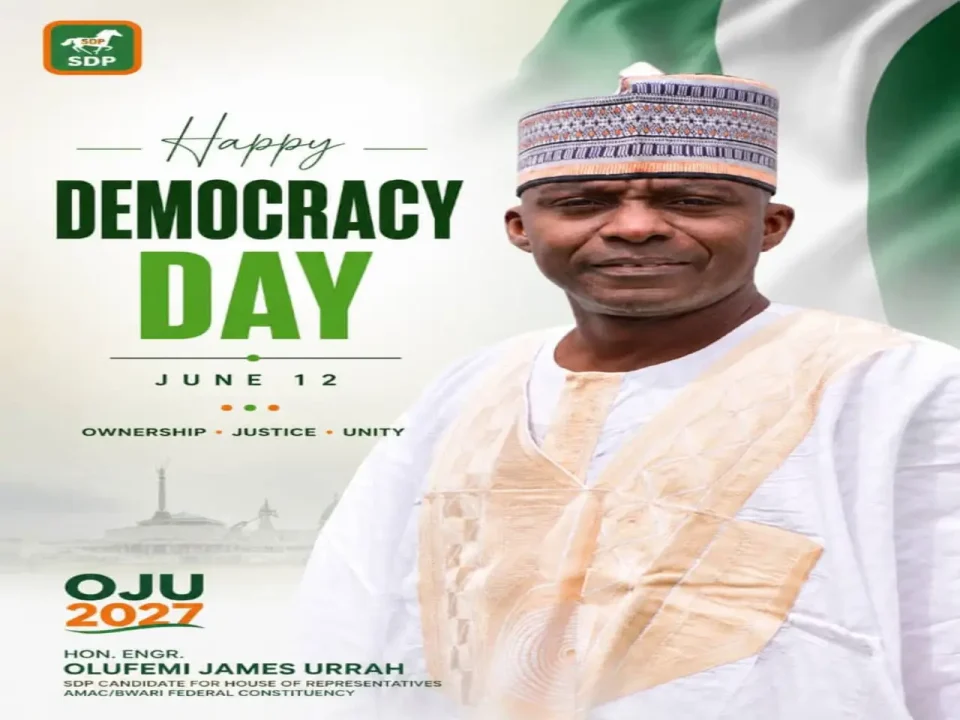

Democracy Day 2026: Hon. Engr. Olufemi James Urrah Celebrates Nigeria’s Democratic Journey
June 12, 2026
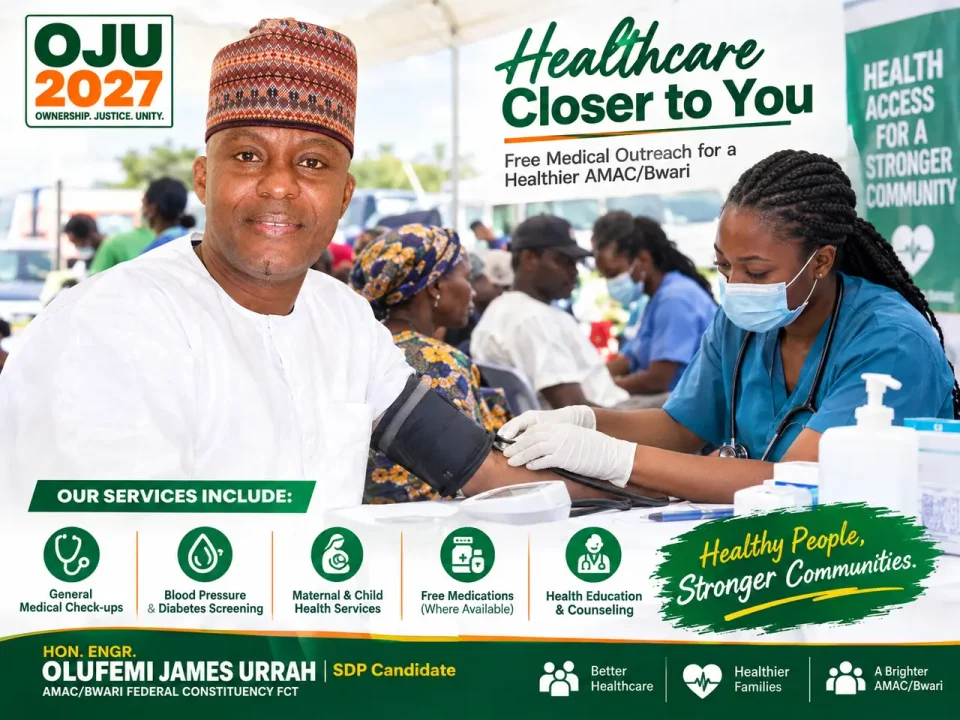
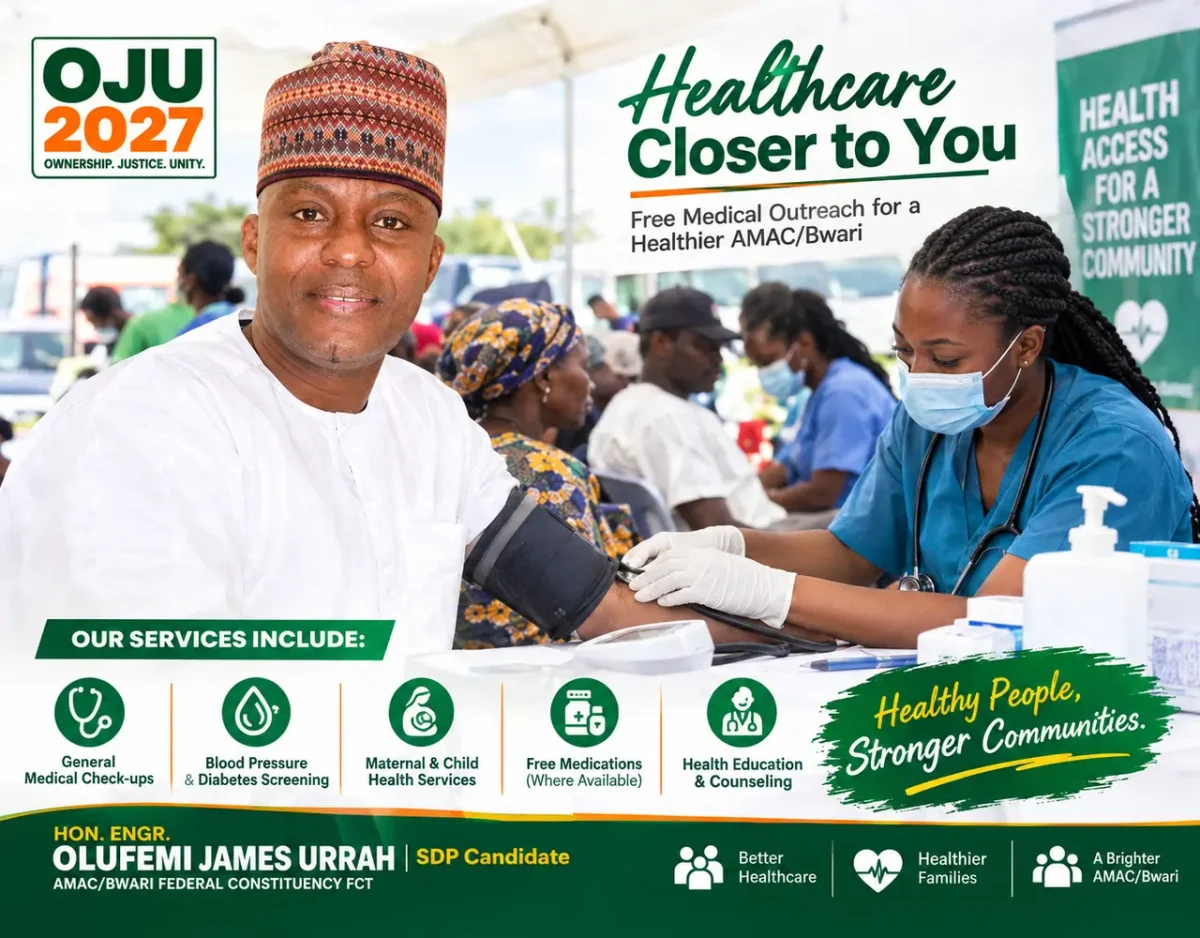
Engr. Urrah Hosts AMAC/BWARI Free Medical Outreach – Over 400 Residents Served
August 22, 2026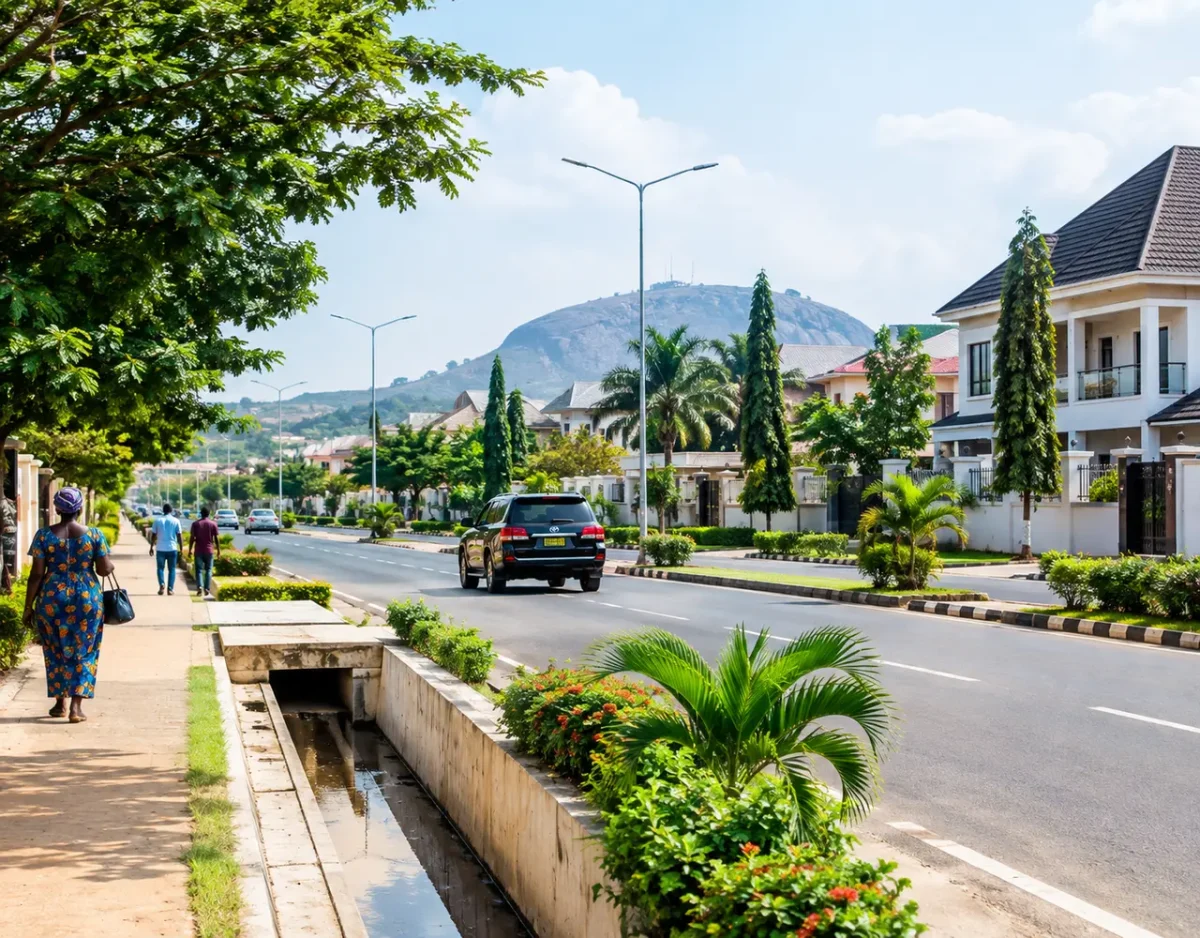
Environmental sustainability is increasingly important to the future of communities across the Federal Capital Territory. For residents of AMAC and Bwari, environmental issues are closely connected to public health, infrastructure, transportation, housing, economic activity and quality of life.
As Abuja continues to expand, sustainable development requires more than constructing new buildings and roads. It also requires responsible waste management, effective drainage systems, protection of green spaces, cleaner communities and infrastructure that can withstand changing environmental conditions.
A sustainable approach to community development should therefore place environmental considerations alongside economic and social priorities.
Building Cleaner Communities
One of the most visible environmental challenges in growing urban and semi-urban communities is waste management.
Effective waste management involves more than removing refuse after it has accumulated. It requires a coordinated system covering collection, transportation, disposal, recycling and public awareness.
Communities across AMAC and Bwari can benefit from stronger waste-management systems that encourage residents, businesses and institutions to take greater responsibility for the environment.
Potential priorities include:
- More reliable waste collection systems
- Properly managed disposal points
- Greater public awareness about responsible waste disposal
- Support for recycling and waste recovery
- Reduction of indiscriminate dumping
- Cleaner markets and public spaces
Waste management can also create economic opportunities through recycling, recovery and other forms of environmental enterprise.
Drainage, Flooding and Stormwater Management
Drainage is another important component of environmental resilience.
Rapid development, inadequate drainage capacity and blocked waterways can increase the risk of flooding during periods of heavy rainfall. Effective stormwater management should therefore form part of infrastructure planning.
Sustainable drainage approaches can include:
- Regular clearing and maintenance of drainage channels
- Improved drainage design in developing communities
- Protection of natural waterways
- Better planning around flood-prone areas
- Enforcement against activities that obstruct drainage infrastructure
- Greater coordination between urban development and stormwater management
Drainage infrastructure should not simply be constructed; it must also be maintained.
Protecting Green Spaces
As Abuja's population and built environment expand, maintaining trees, vegetation and open spaces becomes increasingly important.
Green spaces contribute to the environmental quality of communities by providing shade, supporting biodiversity, reducing heat and improving the general appearance of urban areas.
Community-based environmental programmes could encourage:
- Tree planting
- Protection of existing vegetation
- Community parks and recreational spaces
- Greener public institutions
- Roadside landscaping
- Environmental education programmes
Urban development and environmental protection do not have to be opposing objectives. With proper planning, communities can grow while retaining important natural assets.
Sustainable Infrastructure
Environmental sustainability should also be incorporated into infrastructure planning.
Roads, public buildings, drainage systems, water infrastructure and other public assets should be designed with durability, maintenance requirements and environmental impact in mind.
For communities experiencing rapid development, infrastructure planning should consider not only today's needs but also future population growth.
This means encouraging infrastructure that is:
Durable. Efficient. Maintainable. Resilient.
Sustainable infrastructure can reduce long-term public expenditure by lowering maintenance costs and extending the useful life of public assets.
Environmental Health and Public Health
Environmental conditions directly affect community wellbeing.
Poor waste disposal, stagnant water, polluted surroundings and inadequate sanitation can contribute to unhealthy living conditions.
Environmental sustainability should therefore be viewed as part of a broader public-health strategy.
Cleaner communities can support healthier populations, while better environmental management can help reduce avoidable risks associated with poor sanitation and unmanaged waste.
This makes collaboration between environmental agencies, healthcare institutions, local authorities, community organisations and residents particularly important.
Creating Green Economic Opportunities
Environmental protection can also become an economic opportunity.
The transition toward cleaner communities can create jobs and businesses in areas such as:
- Recycling
- Waste collection
- Waste processing
- Landscaping
- Tree planting
- Environmental maintenance
- Renewable-energy services
- Sustainable construction
Young people and small businesses can potentially participate in these emerging areas through training, entrepreneurship and community-based programmes.
Environmental sustainability should therefore not only be seen as a cost. Properly designed programmes can also support employment and local economic development.
Community Participation
Sustainable environmental management cannot be achieved through government action alone.
Residents, landlords, businesses, schools, religious institutions, community associations and civil-society organisations all have roles to play.
Community participation can include environmental sanitation initiatives, neighbourhood clean-up programmes, tree planting, recycling drives and public education.
The principle is straightforward:
A cleaner environment is a shared responsibility.
A More Resilient AMAC/Bwari
The future development of AMAC and Bwari requires attention to the relationship between people, infrastructure and the environment.
Environmental sustainability can provide a framework for addressing several interconnected challenges—waste management, flooding, sanitation, green spaces, public health and responsible urban development.
A practical sustainability agenda for AMAC/Bwari can therefore focus on four broad priorities:
- Cleaner Communities
Improving waste collection, disposal, recycling and environmental sanitation.
- Resilient Infrastructure
Strengthening drainage, roads and public infrastructure to withstand environmental pressures.
- Greener Communities
Protecting green spaces while encouraging tree planting, landscaping and responsible development.
- Environmental Opportunity
Creating pathways for young people and businesses to participate in recycling, environmental services and the emerging green economy.
Looking Ahead
AMAC and Bwari are communities with significant potential for continued growth. That growth should be accompanied by responsible environmental planning.
Sustainability means ensuring that today's development does not create unnecessary environmental and infrastructure problems for tomorrow.
With stronger planning, community participation, responsible development and effective environmental management, AMAC and Bwari can continue to grow while remaining cleaner, healthier and more resilient communities within the Federal Capital Territory.
Together, we can build cleaner, greener and more resilient communities where responsible development, effective waste management and environmental sustainability become a shared commitment across AMAC and Bwari.”
Hon. Engr. Olufemi James Urrah (OJU)
SDP Candidate
House of Representatives
AMAC/BWARI Federal Constituency
OJU 2027
Ownership • Justice • Unity
Frequently Asked Questions
Estimated reading time: 1 minute